Five connector names that are constantly mixed up. Here is what you actually need them for, and what you no longer need them for.
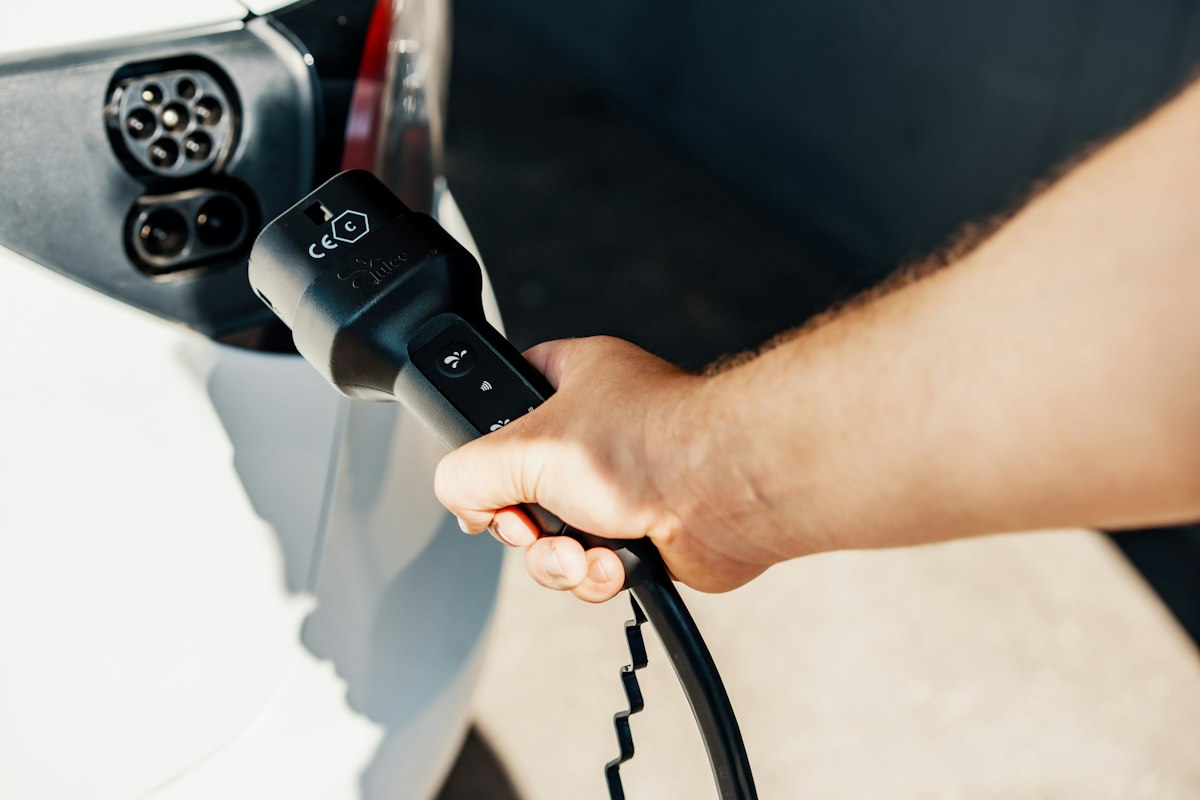
Type 2, named after the German manufacturer Mennekes, has for years been the standard connector across Europe for alternating current (AC) charging. Every electric car currently sold in Switzerland has this socket, and every home wallbox and every "slow" public charging station in a car park or neighbourhood uses it. Typical power levels are 11 kW (three-phase) or 22 kW, and the connector is round with one flattened side and up to 7 contacts.
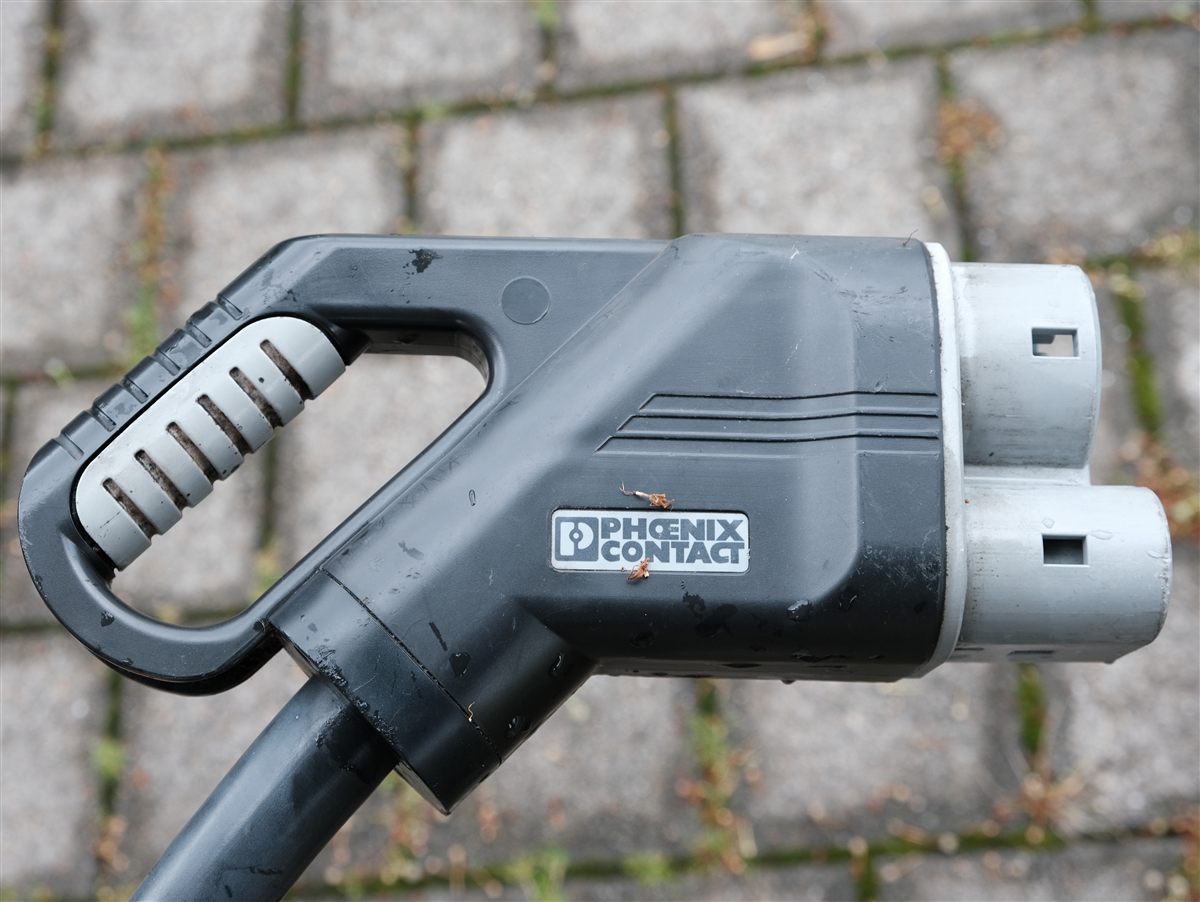
CCS ("Combined Charging System") builds on Type 2: below the normal AC contacts sit two additional, thick contacts for direct current (DC). At public fast-charging stations (motorway service areas, fast chargers), CCS is used almost without exception, in practice at 50 to 150 kW, and considerably more at hyperchargers. This is the connector that practically every new electric car in Switzerland has today, including Tesla, which switched to CCS2 in Europe some time ago.
An important clarification: "CCS" and "CCS2" mean the same thing in Europe; the "2" only distinguishes it from the North American counterpart CCS1 (see below). There is no separate European "CCS2 standard" that differs technically from "CCS", just different names for the same thing.
Contrary to what the name suggests, CCS1 and CCS2 are not version numbers of the same connector but two physically different, incompatible connector families:
For Swiss drivers this only matters for direct imports from North America or South Korea: such a vehicle does not mechanically fit a Swiss CCS2 charging station.
CHAdeMO ("CHArge de MOve") comes from Japan, developed by Nissan, Mitsubishi and Toyota, among others. It is a standalone, round DC fast-charging connector without an AC part, clearly bulkier than CCS and with a distinctive locking lever. Over the years the standard has been greatly extended in terms of power (from around 62 kW in the first versions to, on paper, several hundred kW in newer specifications), but at real Swiss charging stations you will usually only find 50 kW.
Today CHAdeMO is relevant almost only for older vehicles: the Nissan Leaf (until the switch to CCS), older Mitsubishi Outlander PHEV and the identical family of Mitsubishi i-MiEV, Citroën C-Zero and Peugeot iOn. The new Nissan Leaf already comes with CCS instead of CHAdeMO, so the connector is losing importance even in its most important vehicle. A CHAdeMO-to-CCS adapter practically does not exist as an everyday solution; there are a few active (electronic) niche adapters, but they are not standard equipment.
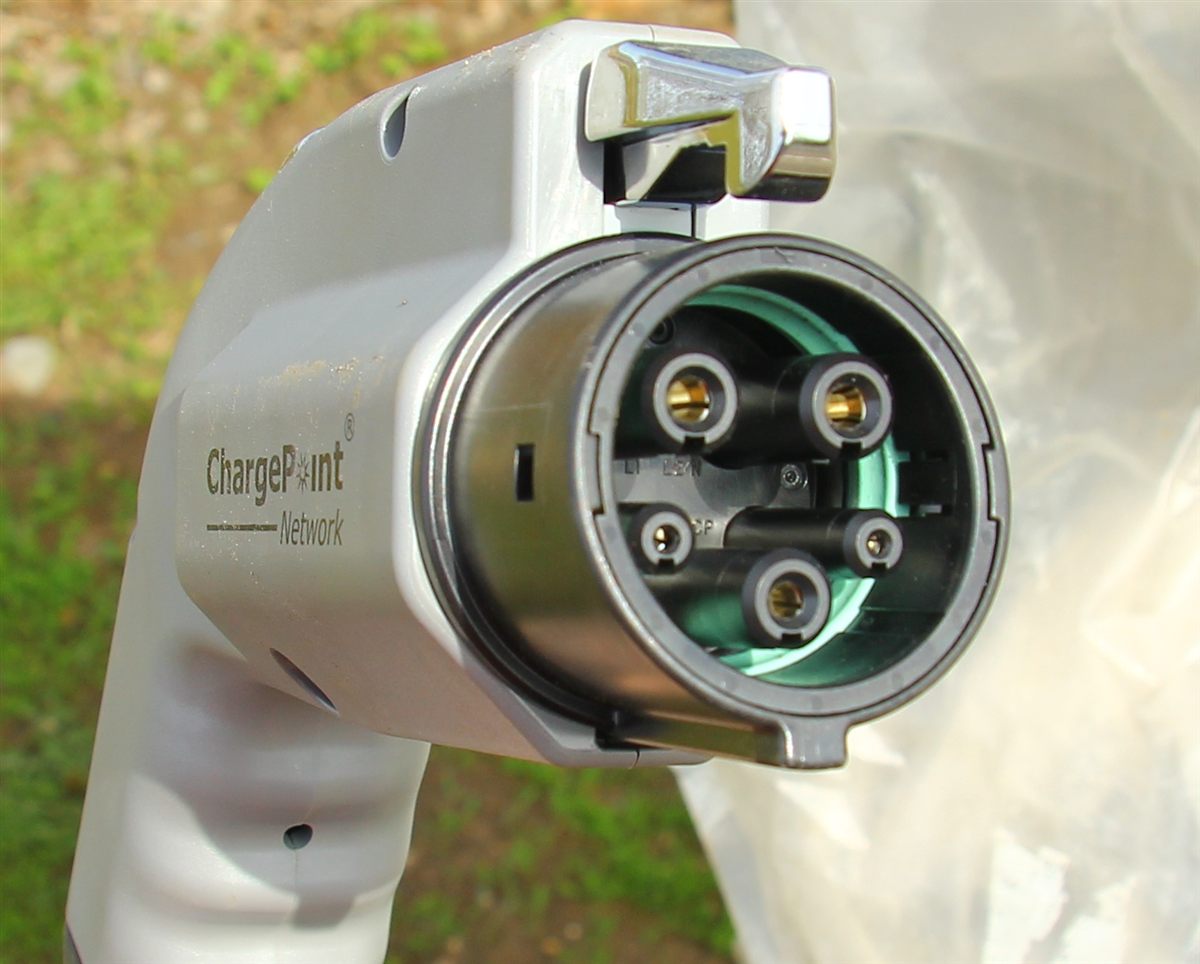
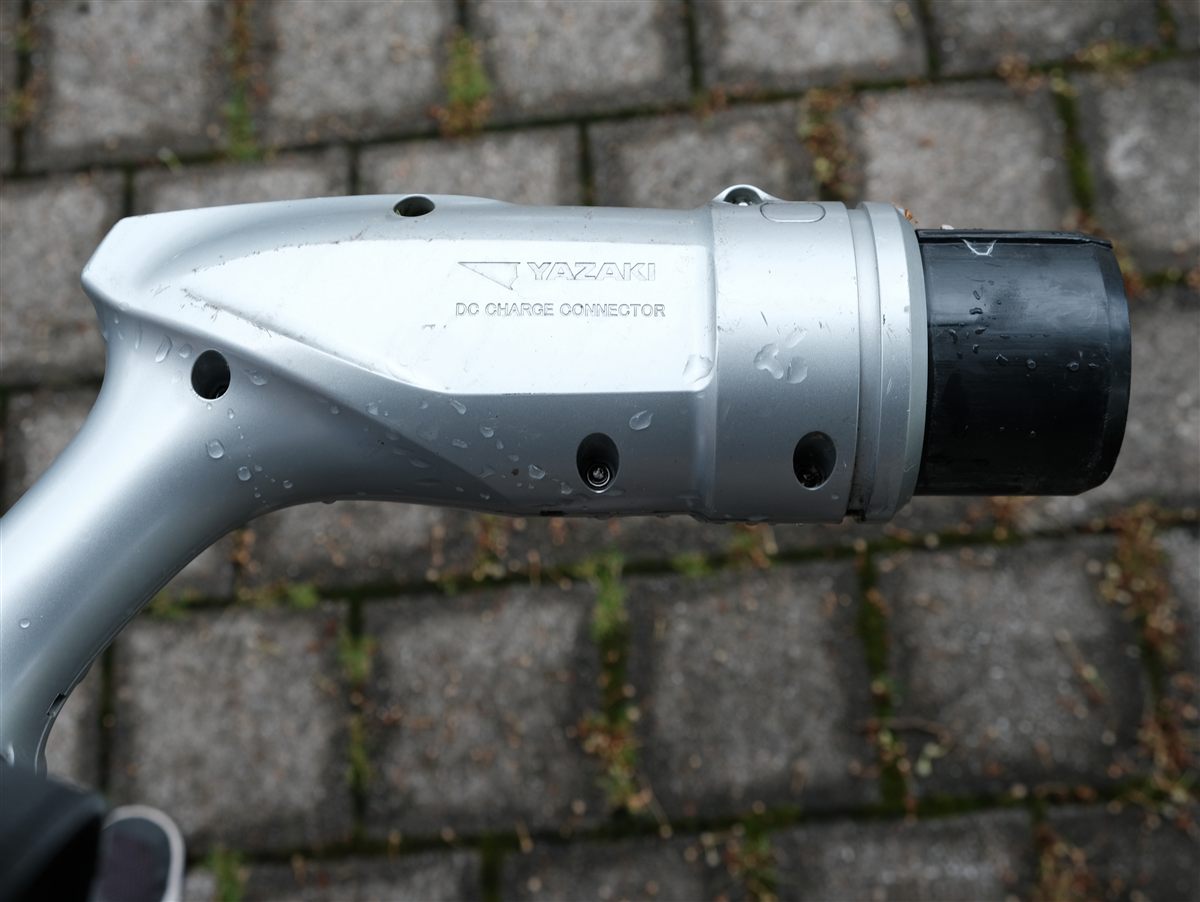
This is the small AC connector found on older Japanese vehicles. Type 1, also known as SAE J1772 or the Yazaki connector (after the Japanese company that first developed it), is the AC predecessor standard from Japan and North America. It has only 5 instead of 7 contacts, can only charge single-phase (no three-phase current, hence a maximum of around 7.4 kW instead of 22 kW), and is round without the flattened side of Type 2. The lock sits on the connector itself, with a button to release it.
In Switzerland you now only find it on older used vehicles, mainly the Mitsubishi i-MiEV/Citroën C-Zero/Peugeot iOn family and early Nissan Leaf export versions. Since the EU-wide Type 2 requirement, no new vehicle has been delivered with it. Anyone driving such a car charges at normal Type 2 charge points via an adapter cable, though still limited to the vehicle's single-phase charging power. We could not find a separate, even smaller connector variant specifically for Japanese kei cars; even very small Japanese electric cars such as the i-MiEV use regular Type 1/J1772.
As of: October 2026. Sources: Wikipedia (IEC 62196, SAE J1772, CHAdeMO), Swiss Federal Roads Office (FEDRO) (blog.astra.admin.ch), ladestationguru.de, goingelectric.de, monta.com. Where sources gave different power figures (especially for CHAdeMO standard versions), we stated the range instead of a single number.